
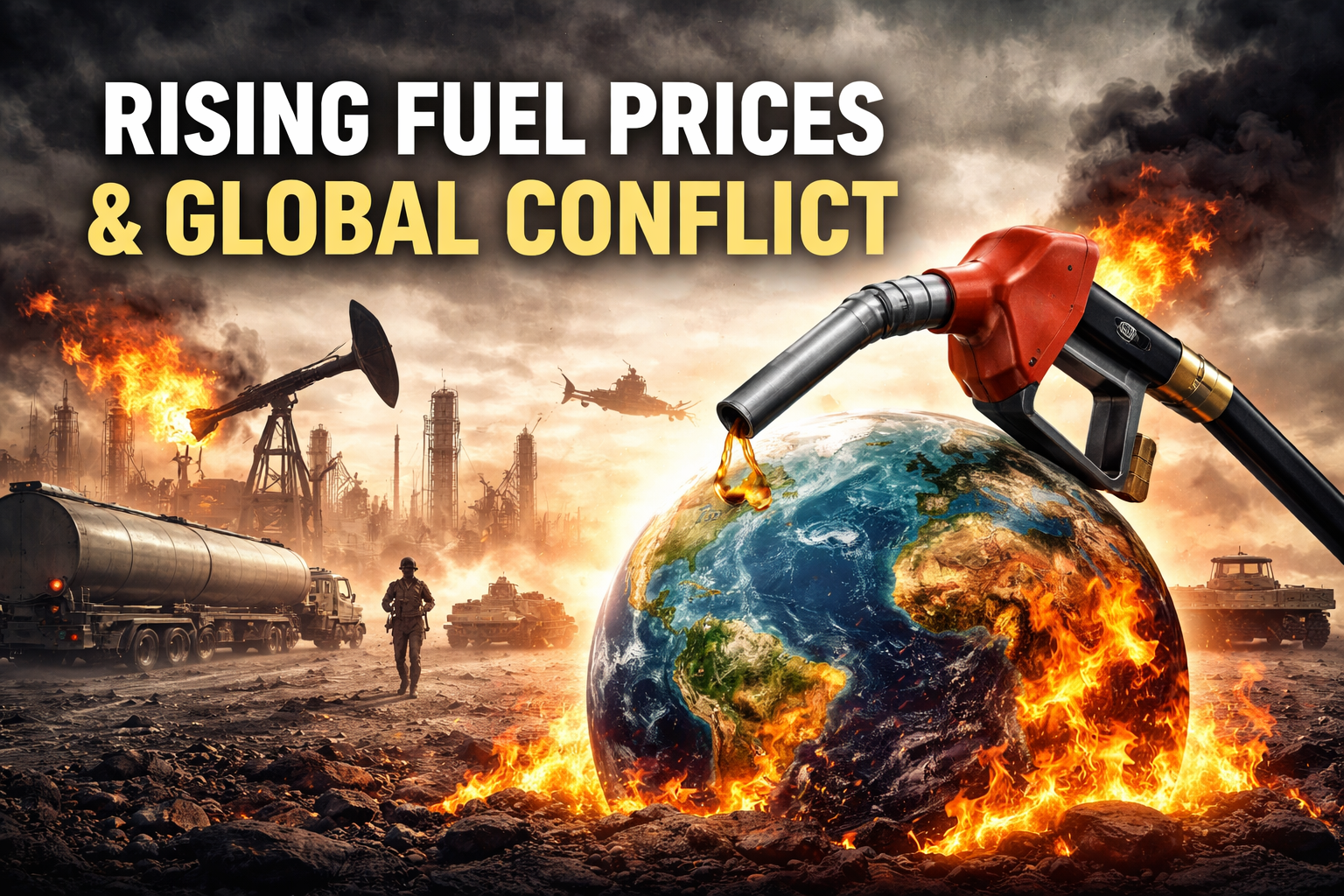
In recent times, the world has been witnessing a steady rise in fuel prices, especially petrol, and many people are struggling to understand the real reason behind it. While local taxes and supply-demand dynamics play a role, one of the biggest hidden drivers is global conflict. Wars and geopolitical tensions have always had a deep impact on energy markets, and today is no exception.
Petrol prices are directly influenced by crude oil, which is traded globally. When a conflict breaks out in a region that produces or transports oil, the supply chain becomes unstable. Even the fear of disruption can push prices higher. Investors and traders react quickly, often leading to sudden spikes in fuel costs even before any actual shortage occurs. This creates a ripple effect that touches every part of daily life.
One of the key reasons wars affect petrol prices is because many oil-producing regions are located in politically sensitive areas. When tensions rise, production may slow down, shipping routes may be blocked, or sanctions may be imposed. All of this reduces the availability of oil in the global market. As supply decreases and demand remains constant or increases, prices naturally go up.
Another important factor is transportation. Oil is not only produced but also needs to be transported across countries and continents. In times of war, major shipping routes may become unsafe. Insurance costs for tankers rise, and companies may avoid risky areas altogether. This leads to delays and reduced supply, further increasing petrol prices.
In addition to physical disruptions, wars also create economic uncertainty. Governments may impose restrictions, freeze assets, or change trade policies. Currency values can fluctuate, and this impacts how oil is priced and purchased internationally. Since oil is usually traded in global currencies, any instability in financial systems can directly influence petrol costs at the consumer level.
For ordinary people, the impact of rising petrol prices goes far beyond just filling up their vehicles. Transportation costs increase, which leads to higher prices for goods and services. Food, groceries, and everyday essentials become more expensive because they all rely on fuel for production and delivery. This creates inflation, reducing the purchasing power of individuals and affecting overall quality of life.
Businesses are also heavily affected. Logistics companies, airlines, and manufacturing units face higher operational costs. Many companies are forced to increase prices or reduce services. Small businesses, in particular, struggle to cope with these sudden changes, leading to economic stress and sometimes even closures.
At the same time, governments face pressure to manage the situation. Some may reduce taxes on fuel to provide temporary relief, while others may offer subsidies. However, these measures are often short-term solutions and may not be sustainable in the long run. The real challenge lies in reducing dependence on volatile global oil markets.
This is why many countries are now focusing on alternative energy sources. Electric vehicles, renewable energy, and energy efficiency are becoming more important than ever. While these solutions cannot completely replace petrol overnight, they offer a long-term path toward stability and independence from global conflicts.
It is also important to understand that modern wars are not just fought on battlefields. Economic warfare, sanctions, and trade restrictions are powerful tools that can reshape global markets. Fuel prices are often one of the first areas where these effects become visible. By the time people notice the increase at fuel stations, the underlying causes have already been in motion for weeks or even months.
In conclusion, the connection between petrol prices and global conflict is complex but undeniable. Wars disrupt supply chains, create uncertainty, and drive up costs across the world. While individuals may feel helpless in the face of such large-scale events, awareness is the first step toward understanding the bigger picture. As the world continues to face geopolitical challenges, the need for smarter energy solutions and global cooperation becomes more critical than ever.